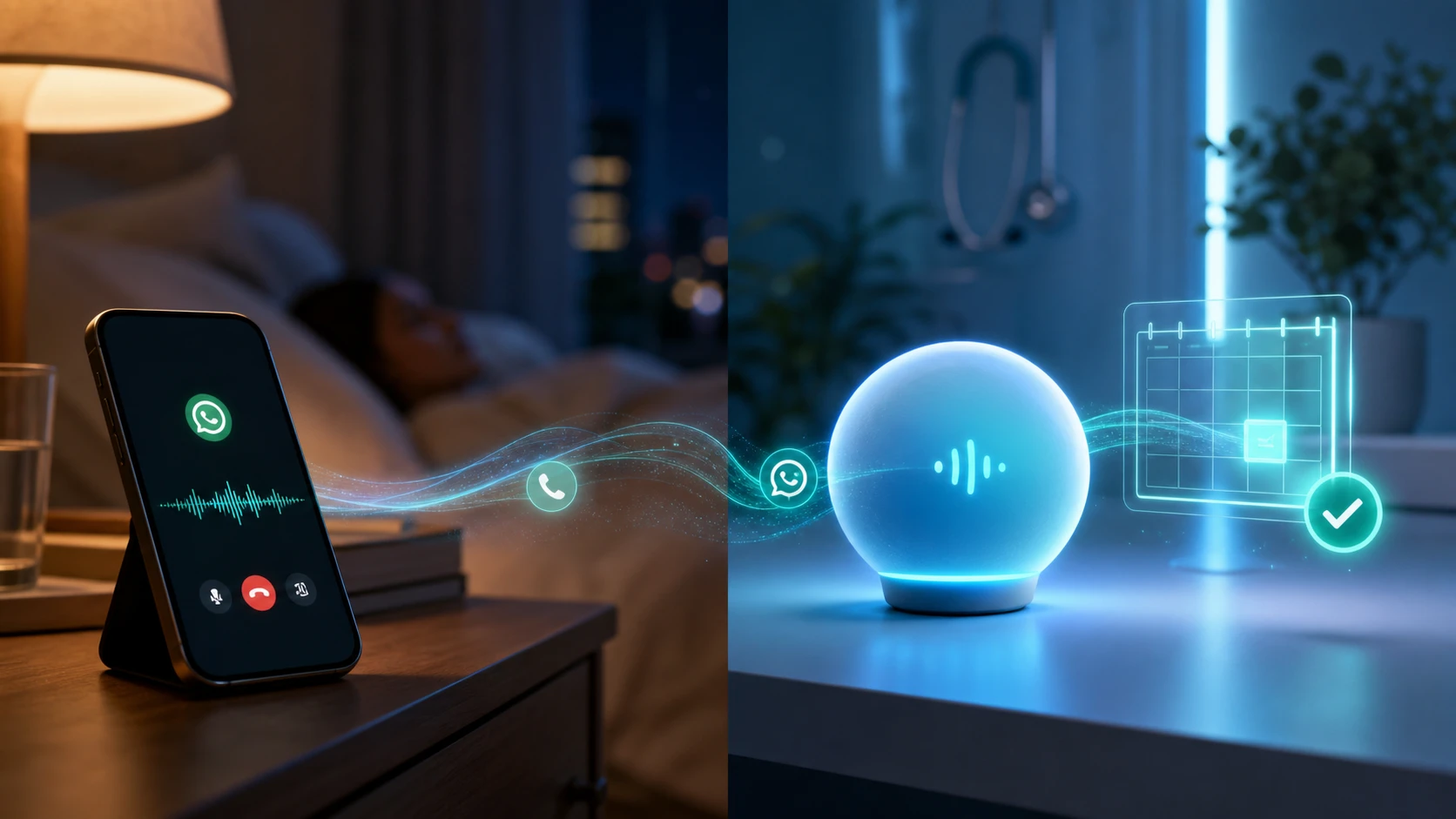
Picture a patient in San Diego at 9 p.m. on a Sunday. She has three implant quotes open in browser tabs, she has decided she is crossing the border to get the work done, and she is ready to book a consultation tonight. She calls the first Tijuana clinic. No answer. She calls the second. No answer. The third picks up, books her for Tuesday, and just earned several thousand dollars that the first two clinics never knew was on the table.
That is the cross-border revenue leak, and almost every clinic in Tijuana has it. It does not show up on any report, because you cannot see the patients who never reached you. This is the one gap worth fixing first, and a bilingual AI voice agent for missed calls closes it directly.
A single missed call in medical tourism is not a small loss
In a local practice, a missed call is often a routine cleaning that reschedules itself next week. In medical tourism the math is different. Your callers are shopping for veneers, implants, a mommy makeover, a bariatric procedure, or a full-mouth restoration. The ticket size runs from hundreds to many thousands of dollars, and the caller has usually already decided to travel. They are not price-checking out of curiosity. They are choosing a clinic.
So when the phone rings out, you are not missing a lead. You are handing a high-value, ready-to-book patient to whoever answers next. Do that a few times a week and the leak is one of the largest line items in your business that never appears in your accounting.
Missed calls in this market almost never come back
Front desks miss calls for ordinary reasons. Someone is with a patient, on the other line, or taking a payment. The usual comfort is that the caller will leave a voicemail and you will call them back. Cross-border patients do not behave that way. They are comparing clinics in real time, often with several numbers pulled up at once, and a call that goes unanswered simply becomes a call to the next clinic on the list.
By the time your front desk clears and notices the missed call, that patient is frequently already booked somewhere else. The callback lands on someone who has moved on. The window was the first thirty seconds, and it closed while your team was busy doing their job.
After hours is when U.S. patients actually reach out

Here is the part that quietly costs the most. Your patients do their research and make decisions on their own schedule, which is evenings, weekends, and holidays, precisely when your desk is dark. A working professional in Phoenix or Los Angeles is not calling clinics at 11 a.m. on a Wednesday. They are messaging at night, after work, on a Saturday morning, or over a long weekend when they finally have time to plan the trip.
If your clinic only answers during business hours, you are absent for most of the hours your best patients are ready to act. The competitor who happens to have someone awake, or an agent that never sleeps, takes the booking. It is not a better clinic that wins. It is the one that was reachable.
What changes when an AI voice agent answers every call
VozClinic answers every inbound call on its own dedicated phone number, so nothing rings out and nothing hits voicemail. It runs around the clock, which means the Sunday-night implant shopper and the Saturday-morning veneer question both get a real answer in the moment they reach out, not a callback the next business day.
The agent does more than pick up. It greets the patient, answers the first questions, qualifies them, and books the consultation directly into your calendar. It can place outbound calls too, so a lead that needs a follow-up gets one automatically. When a case genuinely needs a human, it hands off a qualified patient with the context already gathered, instead of a pink slip with a phone number on it.
It answers on the channels your patients already use

Cross-border patients live on their phones, and in Mexico and along the border that means WhatsApp above all. VozClinic runs as a native WhatsApp agent, handling both voice and text, so the late-night message gets the same instant, competent response as a phone call. It also works on Telegram, sends SMS when a clinic prefers it, carries its own direct phone number for inbound and outbound voice, and embeds on your website so a visitor can book by voice without leaving the page.
One agent covers all of it, and it stays consistent everywhere. The patient who messages on WhatsApp at midnight and the one who calls the front desk at noon meet the same clinic.
Bilingual is what makes the save land
Answering first only wins the patient if the answer sounds right. A cross-border patient might open in English, switch to Spanish to ask about price, then switch back. VozClinic was built bilingual from the start, detects the patient's language, matches it, and switches mid-conversation without missing a beat. Catching the call is step one. Sounding local and handling both languages cleanly is what turns the catch into a booking.
Book a demo
Book a 20-minute call and we'll show you Sofía handling your clinic's real cases, in Spanish and English.
Questions? Email us at hola@vozclinic.com.
← Back to the blog